Vehicle Mounted Unit
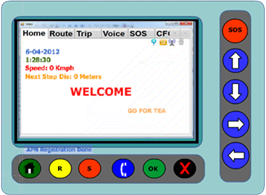
VMU will update the location information like Latitude and Longitude to the central server through GPRS.
LED Display
Expected time of arrival of the bus will be displayed in the bus stops. This information will be updated by central server through GPRS.
About I.T.S
|
What is ITS?
|
 Intelligent
Transport System well known as ITS, allows monitoring and
tracking of fleet of buses. This is the first attempt at
implementing ITS in India. The corporation plans to cover 500
buses, 105 bus stops, six bus terminals and 45 platforms in
the city. The Intelligent Transport System Project addresses
the critical issue of road congestion by offering state-of-art
technologies and attractive, convenient, comfortable, value
added services to encourage the usage of bus services against
individual personal vehicles.
Intelligent
Transport System well known as ITS, allows monitoring and
tracking of fleet of buses. This is the first attempt at
implementing ITS in India. The corporation plans to cover 500
buses, 105 bus stops, six bus terminals and 45 platforms in
the city. The Intelligent Transport System Project addresses
the critical issue of road congestion by offering state-of-art
technologies and attractive, convenient, comfortable, value
added services to encourage the usage of bus services against
individual personal vehicles.
|
Why ITS?
|
 With the driving in Mysore becoming a nightmare, and parking
problems all the more bothersome in urban centers, a high-tech
solution in public transport system could usher in a new era
for city dwellers with many shifting to the public transport
system. Against this background, the solution planned for
Mysore provides for a dynamic passenger information system
(PIS) available on public displays at bus stops, bus terminals
and even on the Internet. With this facility to be available
shortly, one could plan a commute knowing in advance the exact
time it would arrive at the bus stand, availability of seats
and the time it would take to reach the destination, thus
saving on the waiting time at the bus stand and avoiding
overcrowded buses. This uncertainty is what drives most people
to use their own vehicles. These new services based on
GPS-enabled navigation systems and supported by information
and communication technologies will help KSRTC run their
operations efficiently. Each bus will be continuously tracked
by a central control station and it is planned to integrate
ITS with the traffic management system, says R Sekar,
principal consultant of eGestalt, who are the consultants to
this project. KSRTC hopes to woo a significant population of
the self-driven vehicle owner segment to move to public
transport system that is supported by real-time information,
and help reduce road congestion and other transport issues.
Supported by a two-way communication voice facility, the
driver and the central control station could be in constant
touch on road traffic-jams, incidents and accidents, route
diversion in case of emergencies, etc., The ITS solution will
scale up to meet additional buses deployed as necessary on
temporary or permanent basis. Building intelligence into the
transport system brings in the convergence of technologies
providing a synergetic transformation in the commuter
experience. ITS provides benefits in terms of reduce waiting
time and uncertainty, increase the accessibility of the
system, increase the safety of users, reduce the fuel
consumption and emissions, reduce the operational costs,
improve traffic efficiency, reduce traffic congestion, improve
environmental quality and energy efficiency, improve economic
productivity.
With the driving in Mysore becoming a nightmare, and parking
problems all the more bothersome in urban centers, a high-tech
solution in public transport system could usher in a new era
for city dwellers with many shifting to the public transport
system. Against this background, the solution planned for
Mysore provides for a dynamic passenger information system
(PIS) available on public displays at bus stops, bus terminals
and even on the Internet. With this facility to be available
shortly, one could plan a commute knowing in advance the exact
time it would arrive at the bus stand, availability of seats
and the time it would take to reach the destination, thus
saving on the waiting time at the bus stand and avoiding
overcrowded buses. This uncertainty is what drives most people
to use their own vehicles. These new services based on
GPS-enabled navigation systems and supported by information
and communication technologies will help KSRTC run their
operations efficiently. Each bus will be continuously tracked
by a central control station and it is planned to integrate
ITS with the traffic management system, says R Sekar,
principal consultant of eGestalt, who are the consultants to
this project. KSRTC hopes to woo a significant population of
the self-driven vehicle owner segment to move to public
transport system that is supported by real-time information,
and help reduce road congestion and other transport issues.
Supported by a two-way communication voice facility, the
driver and the central control station could be in constant
touch on road traffic-jams, incidents and accidents, route
diversion in case of emergencies, etc., The ITS solution will
scale up to meet additional buses deployed as necessary on
temporary or permanent basis. Building intelligence into the
transport system brings in the convergence of technologies
providing a synergetic transformation in the commuter
experience. ITS provides benefits in terms of reduce waiting
time and uncertainty, increase the accessibility of the
system, increase the safety of users, reduce the fuel
consumption and emissions, reduce the operational costs,
improve traffic efficiency, reduce traffic congestion, improve
environmental quality and energy efficiency, improve economic
productivity.
|
Why Mysore?
|
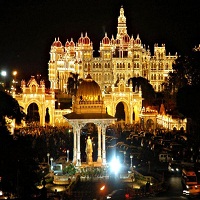 Mysore
has been chosen since it is a potent place given its historical
background, tourist activities, and a high growth rate in
traffic density, medium city size making the project
affordable, and a projected 70% increase in the land use
profile. Also, Mysore city, with all the modern infrastructural
amenities, offers several opportunities to the people to earn
their livelihood thus attracting several people from other
states for employment thus increasing the population of the
city manifold..
Mysore
has been chosen since it is a potent place given its historical
background, tourist activities, and a high growth rate in
traffic density, medium city size making the project
affordable, and a projected 70% increase in the land use
profile. Also, Mysore city, with all the modern infrastructural
amenities, offers several opportunities to the people to earn
their livelihood thus attracting several people from other
states for employment thus increasing the population of the
city manifold..
|
Facts
|
 KSRTC
currently operates in Mysore through 384 schedules from 3
depots with a fleet strength of 416. The modal split figures
for Mysore city indicate that the share of trips performed by
public transport is only 13%, which can still be increased, as
the proportion of walk and two-wheeler trips is high.
Significant modal shift is needed to deliver national and
international sustainable development aims for a strong
economy, an inclusive society, and a clean environment. A
significant trend amongst many urban road users is a
willingness to use the public transport in the face of
increasing traffic congestion and increasing ?road-rage?
behaviour on the roads. With the rising cost of fuel, many
would shift to the public transport on cost considerations. For
some, time is of the essence and a modal shift will occur only
if the new mode offers time improvements, while for others it
is mostly a matter of costs. KSRTC aims to bring about this
modal shift in the city of Mysore by improving the perceived
image of KSRTC services.
KSRTC
currently operates in Mysore through 384 schedules from 3
depots with a fleet strength of 416. The modal split figures
for Mysore city indicate that the share of trips performed by
public transport is only 13%, which can still be increased, as
the proportion of walk and two-wheeler trips is high.
Significant modal shift is needed to deliver national and
international sustainable development aims for a strong
economy, an inclusive society, and a clean environment. A
significant trend amongst many urban road users is a
willingness to use the public transport in the face of
increasing traffic congestion and increasing ?road-rage?
behaviour on the roads. With the rising cost of fuel, many
would shift to the public transport on cost considerations. For
some, time is of the essence and a modal shift will occur only
if the new mode offers time improvements, while for others it
is mostly a matter of costs. KSRTC aims to bring about this
modal shift in the city of Mysore by improving the perceived
image of KSRTC services.
|
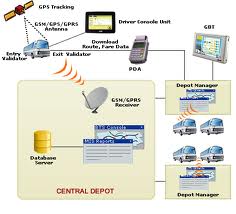
ITS Components ITS covers core systems such as Vehicle Tracking System, Real Time Passenger Information System and Central Control Station. Core technologies include Geographical Positioning System (GPS), Electronic Display Systems, and Information & Communication Technologies. The Global position system (GPS) mounted as part of the Vehicle Mounted Unit in the bus will receive the longitude and latitude coordinates from the Satellite through a process of triangulation. This information is then sent across to the Central Control station through the wireless communication link ? GSM / GPRS. The application at the Central control station on receiving the position inputs will update the display boards at the bus shelters / stops enroute and at the bus terminal platform display panel and the general display panel at the related bus terminals. |
ITS For Commuter As
|
1.Display Boards
|
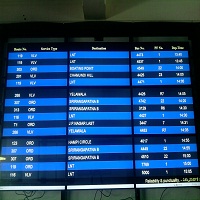 1.Display Boards at Bus Stop:- KSRTC has identified 105 bus
shelters and power facility. These bus stops will be having 2
line/4 line LED display board which will display the Expected
Time of Arrival(ETA) of the next bus on real time basis.
1.Display Boards at Bus Stop:- KSRTC has identified 105 bus
shelters and power facility. These bus stops will be having 2
line/4 line LED display board which will display the Expected
Time of Arrival(ETA) of the next bus on real time basis.|
2.Audio Announcement
|
 Commuters traveling inside the bus can listen and easily
identify the upcoming bus stops. Highly beneficial for the
commuters who are new to Mysore city.
Commuters traveling inside the bus can listen and easily
identify the upcoming bus stops. Highly beneficial for the
commuters who are new to Mysore city.
|
3.GIS Map:
|
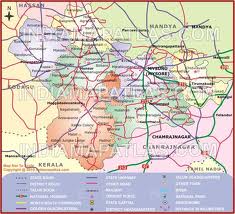 Commuters can easily track the dynamic information like status
of a bus at their finger tip.
Commuters can easily track the dynamic information like status
of a bus at their finger tip.
|
4.SMS:
|
 The SMS system provides real-time bus arrival information and
scheduled bus availability for the convenience of commuters. In
this way commuters shall be able to plan their trip according
to real-time information. For more information refer SMS
The SMS system provides real-time bus arrival information and
scheduled bus availability for the convenience of commuters. In
this way commuters shall be able to plan their trip according
to real-time information. For more information refer SMS
|
5.IVRS:
|
 ITS Interactive Voice Response (IVR) system is to provide
responses to the commuter's queries through pre-recorded
messages to the extent possible. The system will provide
information in Kannada and English specific to Mysore bus
operations and will be accessible from mobile or landline.
phones. For more information refer IVRS
ITS Interactive Voice Response (IVR) system is to provide
responses to the commuter's queries through pre-recorded
messages to the extent possible. The system will provide
information in Kannada and English specific to Mysore bus
operations and will be accessible from mobile or landline.
phones. For more information refer IVRS